Our Heritage
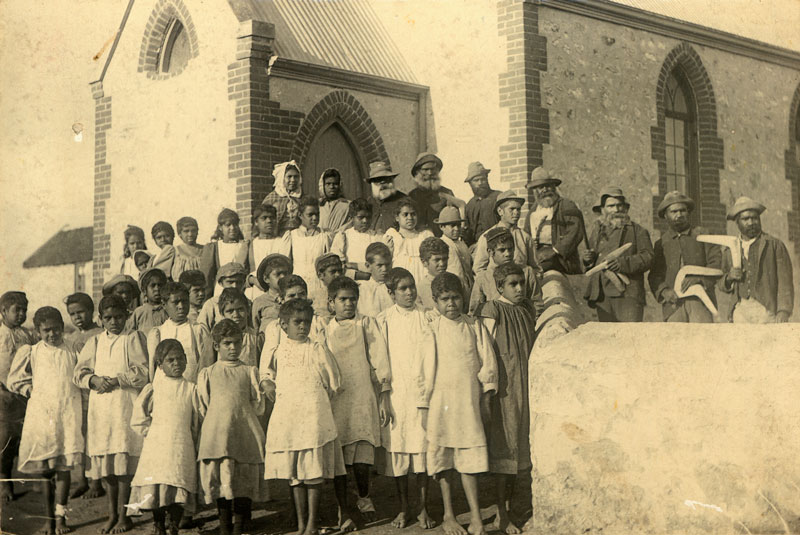

The Ngarrindjeri comprises of many language clans or laklinyeri, and is associated with the Jarildekald, Tanganekald, Meintangk and Ramindjeri, within these tribal groups existed 18 clans (Lakinyeri) that make up the nations of Ngarrindjeri people.
Raukkan
meaning meeting place lies within Yaraldi (Jarildekald) country and was for thousands of years an important meeting place.
The lands of the Yaraldi are located on the eastern side of Lake Alexandrina and the Murray River. Extending over some 1,300 square kilometres
Yaraldi is one of the many dialects of the Ngarrindjeri language and is known as Yarildewallin (Jaralde speech)
For generations Yaraldi people have contributed significantly in the exchange in culture including the preservation of history and heritage and importantly the language.
The Ngarrindjeri first encountered early Europeans when they witnessed the arrival of Charles Sturt in 1830 which was followed by the proclamation of South Australia in 1836. Sturt had been most impressed with the waterways and the country of the Ngarrindjeri that his reports were instrumental in the colonization scheme of South Australia and resulting in the encroachment of Europeans into Ngarrindjeri lands. It was around this time that A smallpox epidemic spread down the River Murray from the colony of New South Wales to the Adelaide plains and beyond, decimating Aboriginal groups along the River and spreading inland. It is estimated that up to 50% of those in affected populations died, with the highest mortality among children and pregnant women. When the colonists arrived in South Australia in 1836, the Aboriginal groups they encountered had been devastated by the impact of the epidemic.
1836
The first employment of a “Protector” of Aboriginal people, the first public service appointment in South Australia.
1843
The South Australian Company took up lands around Lake Albert for sheep and cattle - Land was cleared for grazing and cattle herding, resulting in a decrease in native plant and animal-based food.
1852
Navigational markers erected between Goolwa and Wellington allowing for safe passage across the lakes by paddle boats.
1859
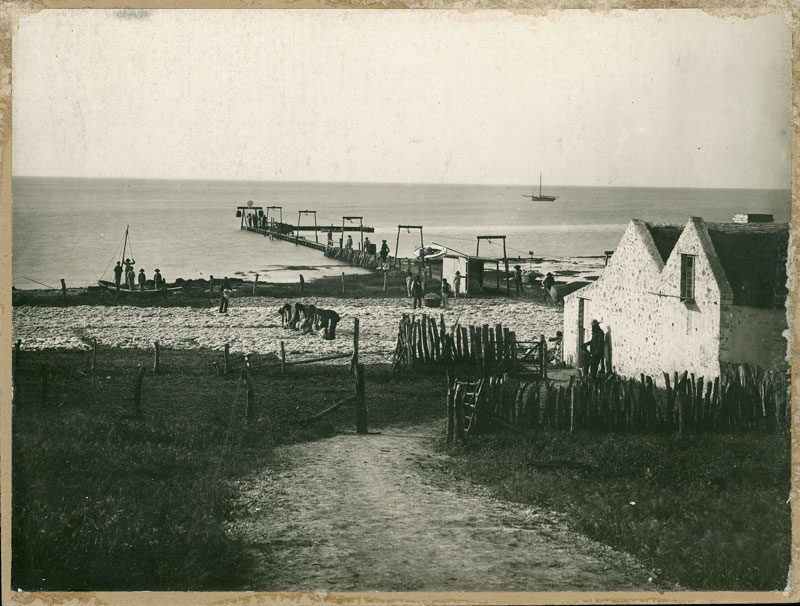
The Aborigines' Friends' Association was granted 107 hectares (260 acres) in the area and established a mission named Point Mcleay, later renamed Raukkan in 1982.
1864
Taplin published some of the first Australian translations of Bible passages into Ngarrindjeri. He recorded many of the customs and stories of the Ngarrindjeri and was greatly respected by them.
1869
Pont McLeay Church built under the direction of Rev George Taplin.
1872
Writer, public speaker and inventor, David Unaipon Born.
1896
Aboriginal men and women at Raukkan were granted the vote and voted in state and federal elections.
1914
Men from Point McLeay were among the first Aboriginal men in the state to enlist in World War 1.
1916
Responsibility for Raukkan moved to South Australia's Chief Protector of Aborigines and it became an Aboriginal reserve.
1966
The Aboriginal Lands Trust Act means titles to Aboriginal reserves in South Australia is now held and managed by Aboriginal people.
1974
Administration of the community was handed to the Ngarrindjeri and today managed by the Raukkan Community Council .
1982
Point McLeay was renamed Raukkan.
Today, Raukkan is a thriving community governed by Ngarrindjeri community members.
Regarded as the home and heartland of Ngarrindjeri Country, Raukkan provides a warm welcome to visitors and tourists wishing to experience a deeper cultural understanding, engage with nature and learn about the local history and heritage.